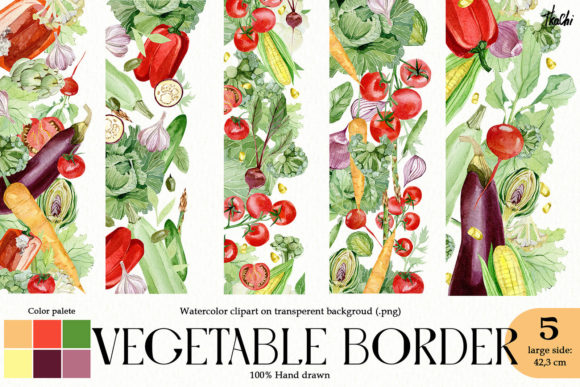
Watercolor Vegetable Border Illustrations
As a graphic designer with years of experience in branding, packaging, and digital design, I always look for creative assets that bring warmth, character, and visual interest to a project. The Watercolor Vegetable Border is one such illustration that offers a soft, organic feel ideal for a wide range of design applications. Its delicate strokes and muted tones create a gentle, inviting mood that can elevate the aesthetic of any project.
First Impressions: A Warm, Handcrafted Vibe
The Watercolor Vegetable Border immediately evokes a sense of handmade charm and natural beauty. The illustration features stylized depictions of vegetables like carrots, cucumbers, and tomatoes, rendered in a loose, painterly style. This gives the asset a friendly, approachable quality that feels more personal than highly polished digital graphics. It’s perfect for brands that want to communicate authenticity, sustainability, or a connection to nature.
This type of illustration works well for small business branding, especially for boutique products, eco-friendly services, or artisanal shops. It adds a touch of whimsy without being overwhelming, making it a versatile choice for designers looking to add a human element to their work.
Real-World Design Applications
In practice, the Watercolor Vegetable Border can be used across multiple design formats. For logo design, it can serve as a subtle background or accent that complements a brand’s typography. In brand identity projects, it helps reinforce a cohesive visual language that feels consistent and memorable.
- Product Labels: The border can frame product names or ingredient lists on food packaging, adding a fresh, homegrown feel.
- Packaging Design: It works well as a decorative element on boxes, bags, or gift wrap, especially for seasonal or limited-edition items.
- Social Media Graphics: When used as a header or background, it enhances the visual appeal of posts for Instagram, Pinterest, or Facebook.
- Print-On-Demand Products: T-shirts, mugs, and tote bags featuring this border can attract customers looking for unique, artistic designs.
- Canva Templates: The illustration can be incorporated into templates for invitations, flyers, or marketing materials, offering a ready-to-use aesthetic.
Where It Shines: Large Layouts and Themed Projects
The Watercolor Vegetable Border excels in large layout areas where it can act as a hero graphic or decorative element. It’s particularly effective in themed collections, such as spring or summer campaigns, where a fresh, natural tone is desired. It also works well in product mockups, adding a visual layer that makes the final design feel more complete.
For printable designs, the border can be used as a background for wall art, greeting cards, or stationery. Its soft lines and watercolor texture make it ideal for creating a calming, artistic atmosphere in both digital and physical formats.
When to Use It Carefully: Minimalist and Professional Contexts
While the Watercolor Vegetable Border is charming, it may not be suitable for every project. In minimalist branding or professional corporate design, its organic style could clash with clean, modern aesthetics. Similarly, in low-contrast or crowded layouts, it might become visually distracting rather than enhancing the overall composition.
Designers should also consider the context of the project. For example, if the client’s brand relies on strong visual hierarchy or high contrast, the border may need to be used sparingly or paired with complementary elements to maintain clarity and focus.
Impact on Design Elements
The Watercolor Vegetable Border influences several key aspects of a design project. It contributes to emotional appeal by evoking a sense of warmth and familiarity. This can help build trust with the audience, especially for brands targeting health-conscious or eco-aware consumers.
It also supports brand consistency when used across multiple touchpoints. Whether it’s a social media post, a packaging label, or a website banner, the border reinforces the brand’s visual identity and creates a cohesive look. However, it’s important to ensure that it doesn’t overshadow other design elements or compromise readability.
Practical Designer Notes
Before using the Watercolor Vegetable Border for a client project, there are several practical checks a designer should perform:
- Test in Black and White: See how the illustration looks without color to assess its versatility and contrast.
- Check Contrast on Different Backgrounds: Ensure it remains visible and readable on both light and dark surfaces.
- Preview at Small and Large Sizes: Confirm that the details remain clear and the style holds up at different scales.
- Place on Real Mockups: Evaluate how it integrates with actual product designs or layouts.
- Review File Formats: Check if the asset includes SVG or PNG versions for flexibility in editing and use.
- Inspect Transparency: If the border has transparent areas, ensure they align with your design needs.
- Compare with Font Styles: Test how it pairs with different typefaces to find the best visual balance.
- Confirm Commercial Licensing: Make sure the asset is properly licensed for commercial use, especially when working on client projects.
These steps help ensure that the Watercolor Vegetable Border not only looks good but also functions effectively within the broader design strategy.
Conclusion: A Useful Creative Asset for the Right Project
The Watercolor Vegetable Border is a valuable graphic design asset for designers working on projects that benefit from a warm, handcrafted aesthetic. It fits naturally into themes like handmade businesses, small business branding, and print-on-demand products. Its versatility allows it to be used across various mediums, from social media graphics to t-shirt design.
However, it’s important to use it thoughtfully. When applied correctly, it can enhance a design’s emotional appeal and visual cohesion. For designers looking to add a touch of organic beauty to their work, the Watercolor Vegetable Border offers a compelling option that balances creativity with practicality.